
Key takeaways at a glance
- AI data centers’ electricity costs are rising as demand for always-on power increases, changing how businesses plan and price energy use.
- Electricity is no longer a background operating expense but rather a strategic cost due to rising energy intensity.
- Infrastructure strain is causing utilities and communities to adapt, which may have an impact on long-term rates and availability.
- As AI-driven demand increases, companies that prepare for energy cost certainty will be in a stronger position.
Beyond the headlines, AI is frequently described as a revolution in digital technology. However, businesses are beginning to see a practical reality in their electrical costs behind the software headlines.
As more AI data centers come online, they are subtly changing how electricity is priced, managed, and supplied. AI data centers use massive quantities of power. This change is already having an impact on local political discourse, infrastructure investment, and utility rates in some areas.
Electricity is no longer a background expense for enterprises. It’s turning into a strategic expense.
For many organizations, AI data centers’ electricity costs are now shaping budgeting decisions, site selection, and long-term energy contracts.
Why AI Data Centers Change the Electricity Equation for Businesses
The demand for conventional commercial electricity fluctuates throughout the day. That is not how AI data centers operate.
They need constant electricity, a lot of cooling, and constant operation. Utilities are compelled to make rapid investments in new generation, transmission, and grid enhancements when a large number of these facilities are concentrated in one area.
These investments are not made in a vacuum. They eventually have an impact on who pays and how expenses are recovered.
As AI data centers scale, electricity costs for businesses are becoming harder to predict across regions with constrained grid capacity.
According to long-term electricity demand data from the U.S. Energy Information Administration (EIA), rising baseline power consumption and grid expansion costs increasingly influence how electricity pricing structures are designed and recovered over time.
What Businesses Are Starting to Notice
The effects are gradual rather than instant for many businesses.
Pricing structures for electricity are getting more complicated. Demand fees are more important. Forecasts for the future seem less certain than they did ten years ago. Energy planning is becoming a more important consideration in site selection and growth decisions in rapidly expanding regions.
Companies that previously considered power prices to be fixed are increasingly posing more challenging queries regarding vulnerability and predictability.
Why Communities Are Paying Attention to Data Center Growth
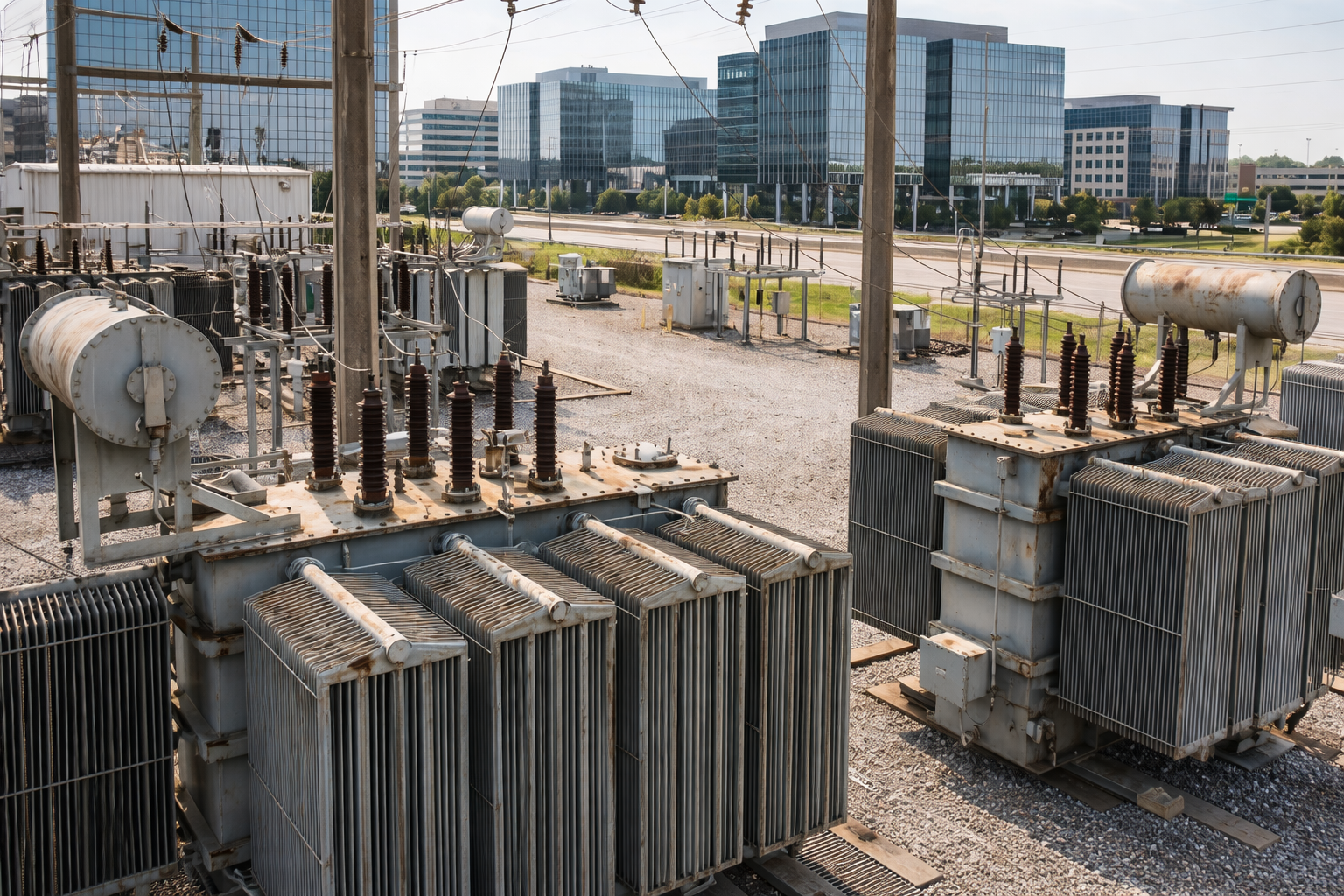
Although AI data centers frequently provide tax income and investment, they also put a heavy burden on the local electrical infrastructure. Utilities must make investments in additional generation, transmission, and grid enhancements as these facilities grow; these expenses aren’t necessarily limited to the biggest energy consumers.
Concerns about whether infrastructure constructed to service huge corporate buildings could someday affect local electricity bills are being voiced by locals and small companies in some communities. These concerns are making it more important to examine how grid expenditures are distributed and who is ultimately responsible for long-term system costs.
Why it matters to businesses:
Project planning is increasingly considering community response. Local resistance has the potential to impede approvals, prolong deadlines, and create regulatory ambiguity that wasn’t anticipated. As a result, energy-intensive projects are increasingly assessed based on community effect and infrastructure readiness in addition to cost and location.
This increasing conflict is already influencing the evaluation of upcoming data center projects and could have an impact on utility pricing patterns in the years to come.
Why Businesses Are Re-Thinking Energy Strategy
In the past, a lot of companies concentrated on getting the best short-term electricity tariff. That way of thinking is changing now.
Businesses are prioritizing predictability over marginal savings as AI-driven demand raises baseline power use. Diversified energy sourcing, long-term contracts, and fixed pricing are increasingly seen as risk-management strategies rather than cost-cutting measures.
This change reflects how businesses currently handle other volatile inputs, like raw materials, gasoline, and shipping.
Key takeaway: The question is no longer “What’s the cheapest power today?” but “How exposed am I to changes tomorrow?”
Where This Leaves Businesses
The lesson for businesses is to prepare rather than panic.
As the need for electricity increases :
- The likelihood of price volatility increases.
- The cost of infrastructure becomes more apparent.
- Long-term agreements and energy planning are more important.
In response, some businesses are locking in fixed power prices. Others are reevaluating their operational locations and degree of vulnerability to regional grid limitations.
Prioritizing cost certainty over chasing the lowest rate is a recurring subject.
AI Isn’t Just the Problem; It’s Part of the Solution
Ironically, the same technology driving demand is also helping manage it.
In order to improve grid planning, optimize energy use, and forecast electricity needs more precisely, advanced analytics and AI methods are being employed. These tools can lessen inefficiencies and help businesses make better decisions about when and where to consume power, even while they won’t stop rising demand.
This could eventually give businesses that implement data-driven energy plans early a competitive edge.
The Bigger Picture
AI data centers are not a fad. They serve as the modern economy’s fundamental infrastructure.
Pricing and availability of power will become more important in community planning, company strategy, and regional competitiveness as they grow. Businesses that anticipate this change will be in a better position to control expenses, whereas others might have to respond after the fact.
In this environment, decisions about where to operate, how to source power, and when to invest in efficiency are becoming core business strategy, not operational afterthoughts.
These days, electricity is more than simply a utility line item. It’s turning into both a commercial risk and an opportunity.
Disclaimer
This article is for informational purposes only. AI tools and features change frequently, and performance may vary by use case. Readers should evaluate tools independently and refer to official documentation before making decisions. Nothing in this article should be considered financial, technical, or operational advice.