


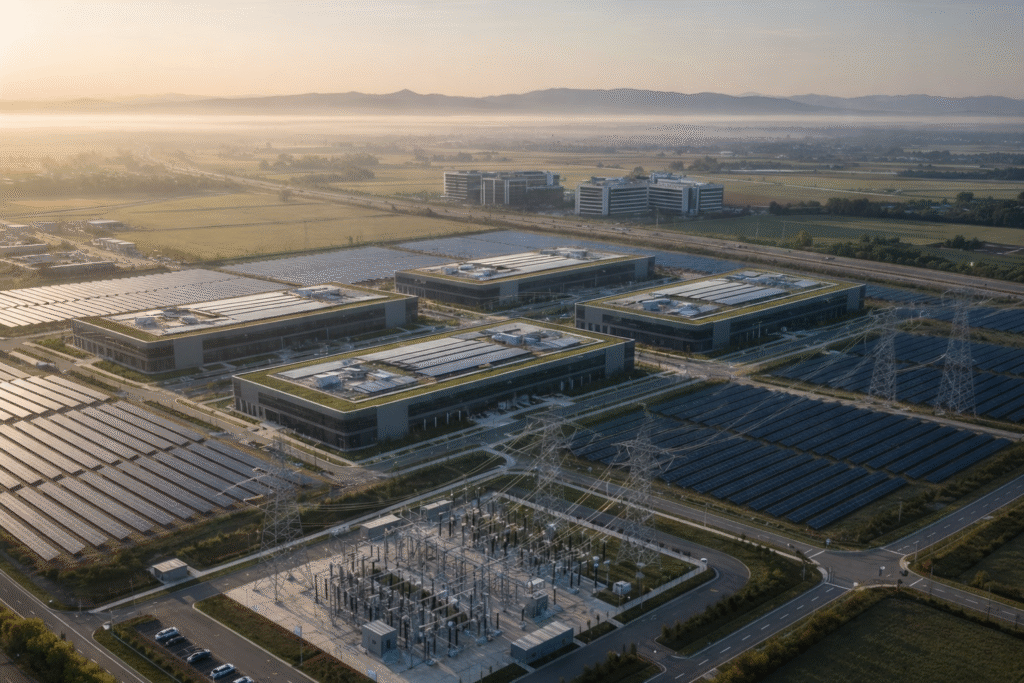
AI is driving a massive expansion of data centers, with electricity consumption projected to more than double to ~945 TWh by 2030.
Power availability is now one of the biggest constraints shaping where digital infrastructure can actually be built.
Global capacity is expected to grow rapidly, with nearly 100 GW of new data centers added between 2026–2030.
Grid pressure, sustainability concerns, and infrastructure readiness are quietly reshaping where AI companies choose to expand.
How AI Company Location Strategy Is Quietly Changing
AI company location strategy is changing fast. Discover the 7 silent shifts shaping where AI firms build offices, data centers, and infrastructure in 2026.
More than ever, AI companies are choosing where to build rather than just what to build.
Behind the scenes, location strategy is changing due to a number of structural shifts in power demand, infrastructure limitations, and sustainability expectations. AI-powered data centers currently use hundreds of terawatt-hours of electricity worldwide, and by 2030, their electricity consumption is expected to more than double.
These are small but significant changes. They have an impact on how infrastructure is planned, where businesses grow, and which areas will develop into the next AI hotspots.
The seven silent changes propelling that change are listed below, along with their implications for companies making long-term choices.
Shift 1 — Power Availability Is Now a Primary Location Factor
For years, tech companies prioritized proximity to talent, connectivity, and real estate costs.
That hierarchy is changing.
Industry research shows that limited power availability has become a prime inhibitor of data center growth, pushing development into new regions where grid access is stronger.
Some reports now describe energy access as the constraint that determines whether projects can move forward at all.
What this means for businesses
Companies scaling AI workloads are increasingly choosing locations based on:
- Grid capacity
- Power connection timelines
- Energy pricing stability
In many cases, energy access is becoming just as critical as connectivity.
Shift 2 — Electricity Demand From AI Is Rising Faster Than Expected
High-performance computing is necessary for AI training and inference, which dramatically raises electricity consumption.
Through 2030, it is anticipated that the world’s data centers will use 15% more electricity annually than most other industries.
Data centers will likely be one of the main drivers of the U.S.’s electricity demand, which is predicted to reach new record highs through 2026 and 2027.
What this means for businesses
Higher electricity demand affects:
- Operating costs
- Site feasibility
- Expansion timelines
As energy becomes a strategic input, location planning is shifting accordingly.
Shift 3 — AI Infrastructure Is Expanding at Historic Speed
The global data center industry is about to enter a period of rapid expansion.
Forecasts indicate that between 2026 and 2030, almost 100 GW of additional data center capacity will be added, essentially doubling the world’s capacity.
Meanwhile:
The rate of vacancies is decreasing.
In major hubs, demand is exceeding supply.
What this means for businesses
Competition for:
- Power
- Land
- Infrastructure
is quietly influencing where AI companies choose to build next.

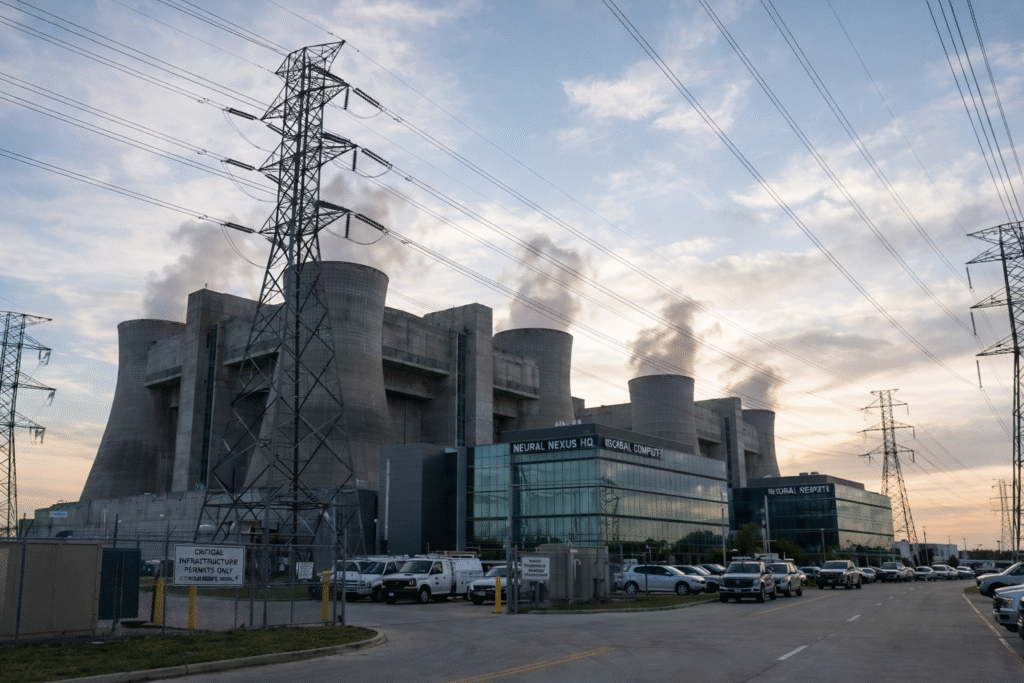
Shift 4 — Sustainability Is Influencing Location Strategy
AI growth is colliding with environmental expectations.
Industry reports show that sustainability pressures and energy efficiency requirements are becoming central to infrastructure planning.
Meanwhile, global electricity demand is rising so quickly that grid investment must increase significantly to keep up.
Real-world implication
Companies are increasingly considering:
- Renewable energy access
- Carbon intensity of local grids
- Cooling efficiency based on climate
These factors can directly affect long-term operating costs and regulatory risks.
Shift 5 — Infrastructure Constraints Are Creating New AI Hubs
A strong AI company location strategy now depends on energy reliability and regional incentives.
New locations are emerging as traditional tech regions reach capacity and power constraints.
Studies show that land availability and electrical grid bottlenecks are forcing expansion into secondary markets.
Only a small percentage of current data centers in some areas are prepared for AI workloads, which further changes expansion plans.
What this means for businesses
AI companies are exploring:
- Emerging markets with available land
- Regions with strong grid expansion plans
- Locations with favorable energy conditions
This is quietly redistributing where innovation clusters form
Shift 6 — AI Hardware Density Is Changing Infrastructure Needs
Modern AI systems require far more energy than traditional computing.
Some AI-focused facilities now demand far higher power densities, with servers expected to exceed 50 kW per rack by 2027.
This creates new requirements for:
- Cooling
- Power distribution
- Facility design
What this means for businesses
Not every location can support next-generation AI infrastructure.
This pushes companies toward regions capable of supporting high-density deployments.
Shift 7 — Energy and Location Strategy Are Becoming Linked
AI’s rise is reshaping how businesses think about geography.
Electricity demand from data centers is forecast to more than double by 2030, making energy a core strategic variable.
This shift affects:
- Where AI companies expand
- Where supporting industries cluster
- Where future innovation ecosystems emerge
The bigger picture
Location decisions are no longer driven by talent and cost alone.
Energy availability, grid resilience, and infrastructure readiness are becoming equally important.
Real-World Use Cases: How AI Adds Strategic Value
Even as AI increases energy demand, it also helps optimize infrastructure.
Machine-learning-powered data center management tools are now used to:
- Predict energy demand
- Improve cooling efficiency
- Optimize power usage
These intelligent infrastructure systems help companies manage growing workloads while reducing waste and operational risk.
In other words, AI is both:
- The driver of new infrastructure demand
- And part of the solution for managing it
Which Makes More Sense for Businesses?
There is no single “best” location strategy anymore.
The right choice depends on balancing:
- Energy access
- Expansion speed
- Long-term operating costs
- Infrastructure readiness
Organizations that factor energy into early planning are better positioned to scale sustainably as demand grows.
The Bigger Picture
The development of AI is changing physical geography in addition to technology.
Companies that refine their AI company location strategy early will have a long-term competitive edge.
Infrastructure limitations, grid capacity, and electricity demand are emerging as key factors influencing the locations of innovation. Businesses that match their location strategy with long-term energy realities will probably have the best chance of growing in the future as these pressures increase.
Disclaimer
This article is for general informational purposes only and does not constitute financial, legal, or business advice. Always consult qualified professionals before making investment or contractual decisions.