


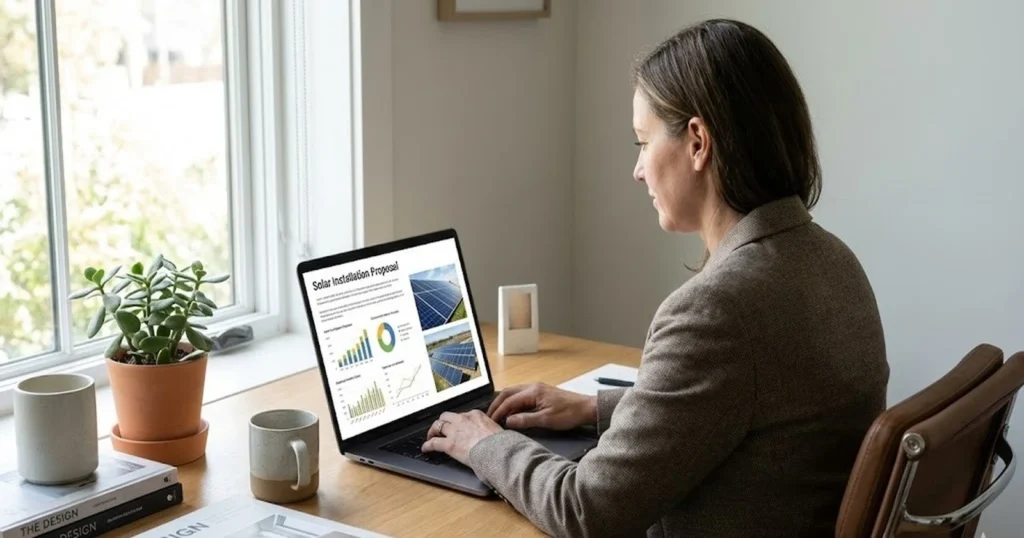
Solar leasing vs buying is one of the most important financial decisions U.S. businesses make when switching to solar energy.
For American businesses, solar energy can significantly reduce operational expenses; yet, many firms are misinformed about the choice between purchasing and leasing. Making the right decision can secure long-term savings, while making the wrong one can silently cost you money for years. Before you sign a contract, consider these things.
Solar Sounds Simple—Until the Paperwork Arrives
Solar pitches often make leasing and buying sound like interchangeable options. They’re not.
For U.S. businesses, this decision can affect:
- Long-term energy expenses.
- Availability of federal tax advantages.
- Cash flow and balance sheets.
- Flexibility in the event of a move, sale, or growth.
Many businesses jump into solar in an attempt to “lock in savings,” only to discover years later that the structure they selected didn’t fit their financial situation.
If you’re considering solar, or already reviewing proposals, this is the part you need to understand clearly.
Solar Leasing vs Buying: The Two Ways Businesses Go Solar
There are two dominant models in the U.S. commercial solar market:
Buying (Owning the System)
Your business purchases the solar system outright or finances it through a loan. You own the asset and the energy it produces.
Leasing or Power Purchase Agreement (PPA)
A third-party company installs and owns the system. Your business pays a fixed lease payment or buys the electricity at a predetermined rate.
Both reduce reliance on utility power, but they work very differently financially.
The Money Snapshot Most Businesses Skip
Before diving deeper, here’s the reality check many sales conversations gloss over:
- Ownership enables companies to take advantage of accelerated depreciation and federal tax incentives directly.
- These advantages are transferred to the system owner rather than the host company through leasing or PPAs.
- The length of the contract, escalators, tax eligibility, and site utilization all have a significant impact on long-term savings.
- The true trade-off is not “which is cheaper upfront,” but rather cash flow versus lifetime expense.
- Projected savings over time may be significantly impacted by changes in utility tariffs, demand fees, and electricity rate structures.
- If a company moves, sells the property, or changes ownership, contract departure conditions and transferability are important.
- Owned systems and third-party agreements have very different maintenance responsibilities and performance risks.
- Depending on the area, access to state or local incentives may favor one structure over another and change the economics.
This is why two companies installing similar systems can see very different outcomes.
When Buying Solar Makes More Sense for Businesses
Buying solar often works best when a business is thinking long-term.
You May Benefit More From Buying If:
- Your business is liable for taxes and is eligible for federal incentives.
- You intend to remain in the building for a long time.
- You want to save as much money as possible during your lifetime, not just temporarily.
- You feel at ease overseeing or contracting out maintenance.
- You would rather have assets than long-term agreements.
Ownership typically delivers stronger economics over the system’s life, especially for businesses with stable operations and predictable energy use.


When Leasing or a PPA Is the Smarter Move
Leasing isn’t a “bad deal”; it’s a strategic one.
Leasing or PPAs Often Make Sense If:
- You want little or no upfront cost.
- Preserving cash for core operations is a priority.
- You don’t want to manage maintenance or performance.
- Your tax situation limits the value of incentives.
- You want predictable energy pricing without asset ownership.
For many growing businesses, leasing reduces friction and complexity, even if long-term savings are lower.
The Question Many Businesses Forget to Ask
Before choosing either option, ask this:
“What happens if our situation changes?”
Things to review carefully:
- Length of contract and departure provisions.
- Rates of escalation in PPAs or leases.
- What occurs if the property is sold?
- Transferability of systems.
- Performance assurances and oversight.
These details matter far more than glossy savings estimates.
Real-World Business Behavior in the U.S.
Large U.S. companies rarely choose just one model.
In practice, many companies structure their solar investments as follows:
- Own on-site systems where control and tax advantages make sense.
- When purchasing renewable energy on a large scale or off-site, consider PPAs.
- Combine strategies to achieve sustainability, risk, and cash flow objectives.
- For places with long-term occupancy, use ownership; for markets with unclear future energy demands, use PPAs.
- As incentives, electricity prices, and corporate priorities change over time, modify solar procurement strategies.
This hybrid strategy reflects a simple truth: there’s no universal “best” option; only what fits your business reality.
How Technology (and AI) Improves Decision-Making Today
Modern tools have quietly changed how businesses evaluate and manage solar.
Smarter Forecasting
Advanced analytics help model production, pricing scenarios, and long-term savings more accurately, reducing guesswork.
Better Performance Monitoring
Predictive systems can flag issues early, improving uptime whether you own the system or rely on a third party.
Faster Financial Comparisons
Businesses can now compare buy vs lease scenarios side by side using real usage data instead of generic assumptions.
The result: fewer surprises and better-aligned decisions.
So… Which One Actually Makes More Sense?
Here’s the simplified takeaway:
- Buying solar often makes more sense for established businesses with tax appetite, long-term site plans, and a focus on maximum lifetime savings.
- Leasing or PPAs often suit businesses prioritizing flexibility, lower upfront costs, and operational simplicity.
The mistake isn’t choosing one over the other; it’s choosing without understanding the tradeoffs.
Final Thought Before You Decide
Solar leasing vs buying is no longer an abstract debate; solar energy is now an economical choice rather than an experimental one.
Examine alternatives thoroughly, compare structures side by side, and concentrate more on how each option would benefit your company in the long run than on sales pitches.
The true savings—or regret—comes from it.
Disclaimer
This article is for general informational purposes only and does not constitute financial, legal, or business advice. Always consult qualified professionals before making investment or contractual decisions.