


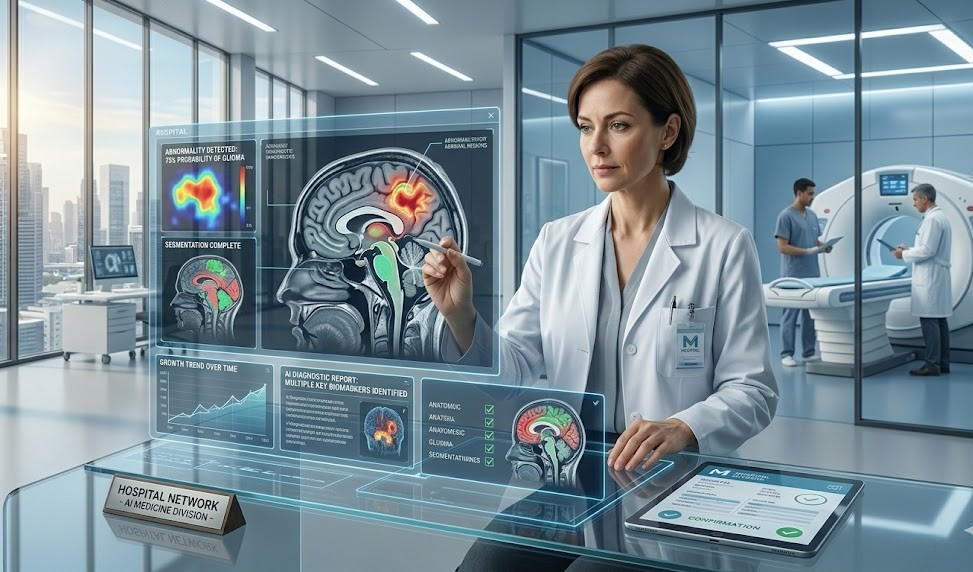
Will AI Replace Your Job in 2026? The answer depends on your industry, the type of tasks you perform, and how automation is being adopted across sectors.
Summary
Sectors at highest risk of job displacement are transport, retail, manufacturing, and administrative support, as these involve repetitive and routine work.
Moderate-risk industries such as finance, law, marketing, and customer service are experiencing significant efficiency improvements through AI, but largely through augmentation.
Lower risk of job displacement is in healthcare, education, and software development, where human intelligence and expertise are critical.
Real-world applications, such as self-driving trucks, AI contract review, and coding tools, have demonstrated tangible productivity improvements.
The way forward is to upskill in AI collaboration, problem-solving, and subject matter expertise, not competing with AI.
How the Risk Ranking Was Determined
The question “Will AI Replace Your Job?” is becoming central to conversations about automation and the future of work.
The ranking is determined by three key considerations:
Published research on automation risk by organizations such as PwC, McKinsey, Brookings, Deloitte, and the World Economic Forum.
Real-world AI adoption that is currently replacing or supplementing human tasks (e.g., cashierless stores, contract review automation, self-driving logistics).
The type of core job tasks, with routine physical and cognitive tasks being at greater risk than nonroutine, interpersonal, or judgment-intensive tasks.
Ranking (1= highest risk) – Quick list
To answer “Will AI Replace Your Job,” we ranked industries based on automation exposure and real-world AI deployment.
- Transportation & logistics
- Retail (checkout & warehousing)
- Manufacturing (routine production tasks)
- Office & administrative support (back-office, clerical)
- Customer service & contact centers
- Finance & accounting (routine analysis, document processing)
- Legal (document review, discovery)
- Marketing & advertising (content production, personalization)
- Software development & engineering (task automation, augmentation)
- Healthcare & education (diagnostics, tutoring)
Will AI Replace Your Job in 2026? Industry Breakdown
1) Transportation & logistics — Highest risk
Why ranked #1: Various sector-level analyses have pointed to transportation and storage as a sector with a potentially large share of automatable tasks (PwC’s sector estimates rank transportation among the sectors with the potentially largest share of automatable tasks), and specialized transport analyses forecast significant job effects from the automation of driving (truck, taxi, delivery). Analyses by the OECD/ITF and other transport studies forecast that automated trucks could reduce the demand for drivers significantly if widely adopted.
Industry Adoption & Evidence
Existing pilots and trials of autonomous trucks (logistics companies and AV startups) are showing potential to eliminate driver tasks. Industry forecasts suggest millions of driving jobs could be impacted in rapid adoption scenarios.
How AI adds value
Lower costs per mile, extended continuous operating hours, and route optimization. These provide compelling business cases for stepwise adoption and displacement of driving tasks.
What should workers do?
Develop skills for fleet management, remote operators, teleoperators, vehicle maintenance, or logistics planning.
2) Retail (checkout, warehousing) — Very high risk
Why ranked #2: PwC and other market research have found that the wholesale & retail industry (cashiers, simple store operations) has strong automation potential. This is already being implemented by large retailers with cashierless stores and automated warehouses (Amazon Go, robotic fulfillment centers), proving that automation at the task level is possible and being scaled.
Industry Adoption & Evidence
Amazon Go / cashierless stores (computer vision & sensors) eliminate the checkout task, while automated warehouse robotics automate picking & packing. Both have been documented in academic and case study literature.
How AI creates value
Improved checkout experience, lower labor costs, better inventory management, and faster fulfillment.
3) Manufacturing (routine production) — High risk
Why ranked #3: Manufacturing is again and again pointed out as a sector that is heavily investing in robotics and “smart manufacturing.” Although job security is strong in some regions, manufacturers are investing in automation, and the potential for automating tasks in production lines is high. Deloitte points out the increasing investment in smart manufacturing and the need for upskilling the workforce.
Industry Adoption & Evidence
Robotic assembly, computer vision for inspection, predictive maintenance with ML — as described in industry outlooks and case studies.
How AI adds value
More output, fewer defects through visual inspection, reduced downtime through predictive maintenance, and improved supply chain planning.
What should workers do?
Transition into robotics maintenance, programming, process engineering, or systems integration.
4) Office & administrative support – High risk
Why ranked #4: Brookings and other studies have identified office administration and clerical work as at risk because of the routine nature of much of the work, involving data processing and predictability. Generative AI upends task workflows (email composition, scheduling, simple report writing).
Industry Adoption & Evidence
Technology that automates scheduling, data entry, and simple reporting is already reducing the need for routine office work. Businesses are using AI assistants for routine office work.
How AI creates value
Document summarization, scheduling optimization, and record-keeping.
5) Customer service & contact centers –Medium-high risk
Why it ranked #5: Chatbots and voice bots/IVR systems are increasingly being used for first-level support. While complex and empathetic support requires human involvement, the mundane triage and answering FAQs can be easily automated. Industry reports indicate a quick uptake of customer-facing generative AI and automation solutions.
Industry Adoption & Evidence
Organizations are using AI agents to provide basic customer queries, and some organizations have even cut down on staff in the front-line support team or repurposed them to handle escalations.
How AI adds value
Basic support 24/7, reduced average handling times, cost savings, and scalability during peak periods.
6) Finance & accounting – Medium risk
Why ranked #6: Financial institutions apply AI to portfolio analysis (BlackRock’s Aladdin), contract processing and legal operations automation (JPMorgan’s COiN case), and fraud analysis. These applications automate manual or analytical work but augment decision-making roles more than they replace them in full.
Industry Adoption & Evidence
JP Morgan’s COiN automated review processes that took hundreds of thousands of hours a year. BlackRock’s Aladdin is a widely used platform for scaling portfolio risk analysis.
How AI creates value
Automating repetitive work in compliance, speeding up settlement processing, and enhancing risk analysis – allowing analysts to focus on higher-level decision-making.
7) Legal (document review, discovery) — Medium risk
Why ranked #7: AI is very good at searching documents, finding contract clauses, and reviewing contracts—tasks that took junior lawyers many hours to complete. Several legal tech suppliers and studies have found that AI cuts these cycles; law firms have realized significant time savings. Yet litigation planning, advocacy, and high-level legal reasoning are still done by humans.
Industry Adoption & Evidence
Document analysis software and e-discovery automation tools are widespread in mid-sized and large law firms; lawyers report time savings and process acceleration.
How AI adds value
Due diligence cycles are shortened, the accuracy of contract reviews is enhanced, and the cost of general legal advice is reduced.


8) Marketing & advertising –Medium risk
Why ranked #8: The marketing processes (copywriting, personalization, creative variations) have been quickly automated by generative AI. eMarketer and industry surveys show quick adoption by marketers using AI for content, personalization, and social media. However, creative strategy, brand, and high-end creative direction remain in human control.
Industry Adoption & Evidence
The use of tools that auto-create ad copy, social media posts, image variations, and A/B test recommendations is common; marketers experience quicker content creation.
How AI adds value
Quick campaign creation, personalized creative at scale, enhanced ROI measurement.
9) Software development & engineering – Lower-medium risk (strong augmentation)
Why ranked #9: Coding work is being sped up by the presence of GitHub Copilot and other AI “pair programmers”; there is research evidence of productivity increases. But architecture design, system integration, and high-level engineering judgment are hard to fully automate. The evidence is for augmentation (speeding up coding, reducing mundane work) rather than replacement.
Industry Adoption & Evidence
Research studies and GitHub’s own research show faster times to complete tasks and greater satisfaction among developers using Copilot-like tools; companies are using Copilot in their engineering teams.
How AI adds value
Boilerplate code, tests, and documentation are automated, and debugging is accelerated so that engineers can concentrate on architecture, security, and system-level issues.
10) Healthcare & education — Lowest direct replacement risk, high augmentation potential
Why ranked #10: Both areas have prominent augmentation use cases: AI-powered diagnoses and FDA-approved ML-based medical devices in radiology, and adaptive tutoring (as in Khan Academy’s Khanmigo). Clinical expertise, ethics, and human empathy maintain essential human roles, although most expert work is automatable. Numerous reviews confirm the explosive increase in FDA approvals of medical AI devices (hundreds of devices) and educational pilots that are scaling rapidly — but the evidence suggests augmentation and change in workflows rather than replacing human professionals en masse by 2026.
Industry Adoption & Evidence
Hundreds of FDA-approved AI/ML medical devices (leaders in radiology), speeding up diagnostic processes. Khan Academy’s AI tutor saw a significant increase in adoption in 2024-25 as a learning assistance tool for students and teachers.
How AI creates value
Accelerated image processing, enhanced screening sensitivity, adaptive learning paths, and teacher assistance — ultimately changing the nature of work rather than obliterating essential human roles.
Cross-cutting takeaways & evidence checklist
Automation risk is task-specific, not job-specific. Reports highlight that task-specific analysis identifies areas of jobs that can be automated; replacement of entire jobs is less likely in the short term.
Generative AI extends disruption from routine manual tasks. Recent research indicates that generative AI poses a risk to cognitive, non-routine tasks (such as mid- and high-paying jobs) because it can generate high-quality drafts and analyses.
Companies are already using AI systems with labor effects. Examples of COiN at JP Morgan and Amazon’s cashier-less stores demonstrate the removal of time or tasks on a large scale.
Policy & training are important. Reskilling will be necessary for organizations and governments to prevent widespread dislocation, as observed by McKinsey and WEF.
The real question isn’t simply “Will AI Replace Your Job?” – it’s whether you are prepared to work alongside AI in 2026 and beyond.
Disclaimer
This article is for general informational purposes only and does not constitute financial, legal, or business advice. Always consult qualified professionals before making investment or contractual decisions.